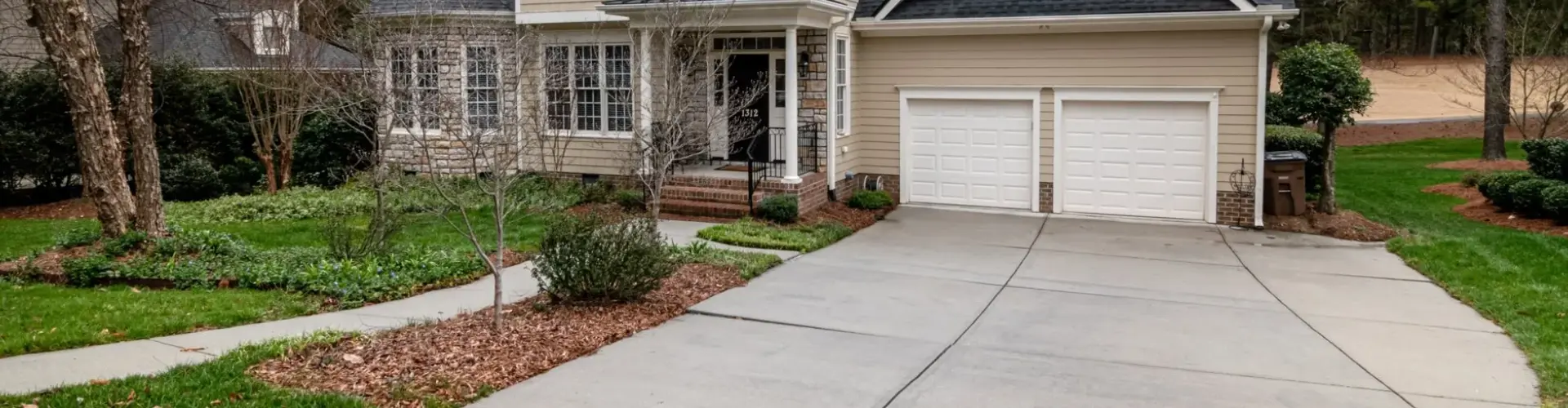
How Do You Know When Concrete Repair in Orlando Is No Longer Enough?
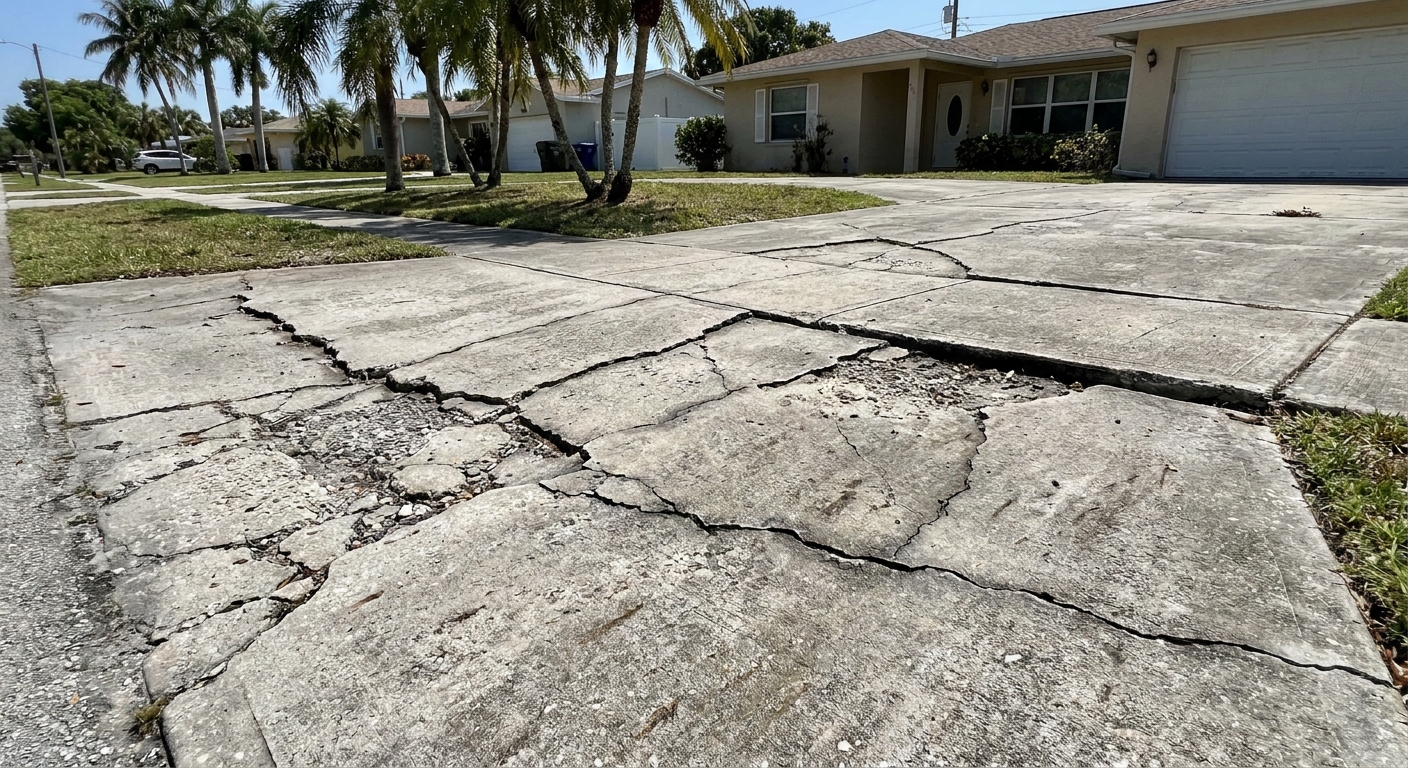
Most property owners think concrete damage is straightforward. Spot a crack, patch it up, move on. But surfaces don't fail in isolation—they're telling you something bigger is happening underneath. Orlando's soil doesn't sit still. Neither does its weather. And if you keep throwing patches at a slab that's already done, you're just delaying the inevitable.
We've seen it happen more times than we can count. A driveway gets filled and sealed, only to crack again six months later. A patio resurface looks fine until the next storm sends water pooling in the same exact spot. At some point, repair stops being a fix and starts being a habit. The real question isn't whether you can patch it—it's whether you should still be trying.
The Cracks That Keep Coming Back
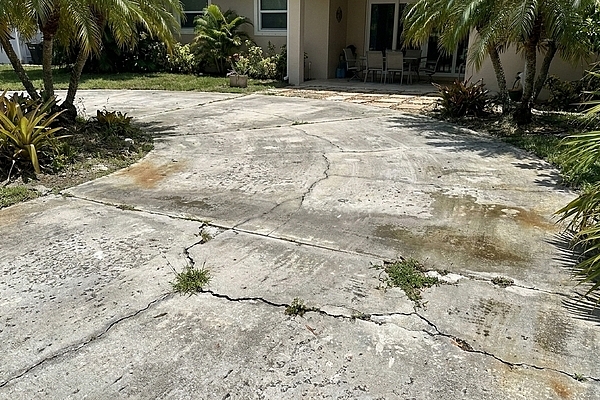
Hairline fractures happen. That's concrete doing what concrete does. But when those lines start branching out like a road map, you're not dealing with surface wear anymore. You're watching structural movement play out in real time. Orlando sits on sandy, shifting soil that doesn't always cooperate with what's built on top of it. Add moisture swings and root expansion, and you've got a recipe for slabs that move whether you want them to or not.
Repairs work when the damage is isolated. They fail when the ground beneath has already made up its mind. If you're filling the same crack twice, the slab isn't settling—it's separating. And no amount of filler changes that. Understanding the causes of cracks in concrete helps determine whether repair is still viable or if replacement should be considered.
When the Surface Starts Peeling Apart
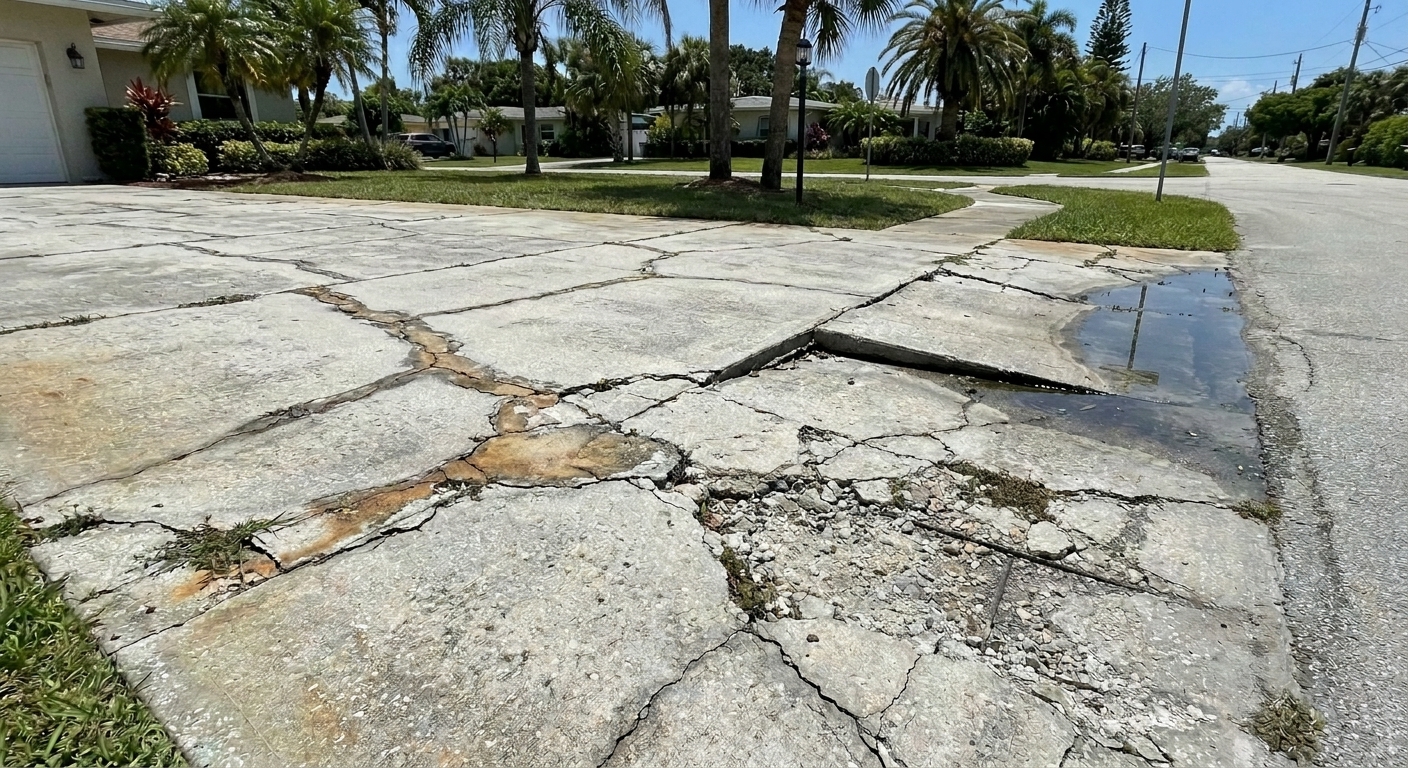
Spalling doesn't whisper. It flakes off in chunks, exposing aggregate and leaving rough, pitted surfaces behind. We see this all the time in Orlando—concrete that looked solid one season and starts crumbling the next. Heavy rain accelerates it. Poor finishing during installation guarantees it. Once the top layer goes, the integrity underneath isn't far behind.
You can skim-coat over spalling if it's light. But when large sections are peeling, you're not repairing the concrete—you're just covering up failure. The bond won't hold long-term, and the cosmetic fix becomes another line item on your maintenance list. This is one of the common concrete repairs in Orlando homes that often signals deeper problems.
Uneven Slabs and Sinking Sections
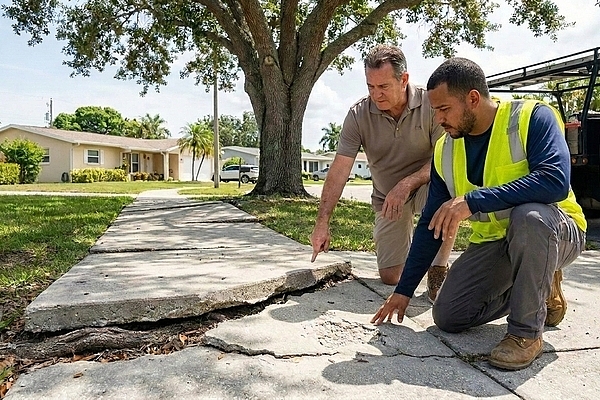
A sunken driveway or tilted walkway isn't just ugly—it's dangerous. Trip hazards draw liability, and uneven drainage sends water exactly where you don't want it. Mudjacking can lift some slabs, but only if the soil underneath is stable enough to hold the correction. If erosion has hollowed out the base or if the settling is ongoing, lifting the slab is a temporary band-aid.
We've worked with property owners who've had the same section lifted three times. Each time, it sinks again. That's not bad luck—that's a foundation issue repairs can't solve. When you notice these warning signs, it may be time to explore professional driveway services that address the root cause.
What the IRS Would Call a Red Flag
Just like deductions need documentation, concrete needs context. If you're constantly repairing, ask yourself what's driving the damage. Is it poor drainage? Expansive soil? A slab that was never thick enough to begin with? Repeating the same fix without addressing the cause is like claiming interest on a loan you never took out—it doesn't add up.
Here's what we look for when assessing whether repair still makes sense:
- Crack density—are fractures isolated or spreading across multiple sections?
- Depth of damage—surface-level or running through the full thickness?
- History of previous repairs—how many times has this same area been addressed?
- Drainage patterns—is water contributing to ongoing deterioration?
- Soil stability—has the base shifted or eroded beneath the slab?
Water Doesn't Negotiate
Drainage problems don't get better with time. If your concrete repair didn't include regrading or installing proper runoff channels, the water will keep doing what it's been doing. Pooling leads to undermining. Undermining leads to voids. Voids lead to cracks, settling, and eventual failure.
We can patch the crack, but if the slope still sends runoff toward your foundation or under your slab, you're not solving anything. Replacement gives you the chance to redesign the grade, add drainage solutions, and stop the cycle before it starts over. Proper drainage planning is especially crucial when preparing your yard for a concrete patio to ensure long-term durability.
The Math Stops Making Sense
At a certain point, repair costs stack up. If you've spent a few hundred dollars multiple times over the last couple of years, you're approaching—or exceeding—what replacement would have cost upfront. And you still don't have a permanent solution.
Here's when the numbers usually tip:
- Repairs exceed 30% of replacement cost
- You've addressed the same problem more than twice in three years
- Underlying issues like drainage or soil instability haven't been corrected
- Cosmetic damage is affecting curb appeal or property value
- Safety concerns—uneven surfaces, exposed rebar, trip hazards—are present
What Replacement Actually Fixes
Tearing out old concrete and starting fresh isn't just about a clean slate. It's about correcting what went wrong the first time. That means proper base prep, adequate thickness for the load, control joints in the right places, and drainage that actually works. If the original install was subpar or if conditions have changed since it was poured, replacement is the only way to build it right.
New concrete also gives you options. Decorative finishes, integrated drainage, reinforced mesh, better curing methods—all of it contributes to a longer lifespan and fewer headaches down the road. When replacement becomes necessary, working with experienced concrete contractors in Orlando ensures the job is done right from foundation to finish.
How We Decide What's Worth Saving
We don't push replacement for the sake of a bigger invoice. But we also don't pretend repairs work when they don't. If the slab is sound, the damage is minimal, and the cause has been identified and corrected, repair makes sense. If the concrete is failing in multiple areas, if the base is compromised, or if you're chasing the same issue over and over, replacement is the smarter play.
Here's what goes into our assessment:
- Structural integrity—does the slab still have strength, or is it fractured beyond function?
- Scope of damage—isolated or widespread?
- Cost-benefit analysis—what's the total cost of continued repairs versus replacement?
- Timeline—how long will a repair hold versus how long a new slab will last?
- Site conditions—are there soil, drainage, or environmental factors that need to be addressed?
When the Ground Beneath Tells the Story
Orlando's soil composition varies dramatically even within the same neighborhood. Sandy soils shift. Clay soils expand and contract. Organic soils compress. If your concrete was poured without accounting for what's underneath, it's only a matter of time before movement shows up as damage. Repairs can't change soil behavior. Replacement can—if the base is prepped correctly and stabilized before the pour.
We've seen slabs fail because the subgrade was never compacted. We've seen driveways crack because tree roots were left in place. And we've seen patios tilt because stormwater was never directed away. All of those issues require more than surface fixes. In fact, Orlando's shifting weather patterns can make ongoing crack repairs particularly challenging when the underlying issues aren't addressed.
Documentation Protects Your Investment
Just like you'd keep loan records and receipts for tax purposes, you need documentation for your concrete work. Photos of the damage before and after repairs, invoices showing what was done, notes on recurring issues—all of it builds a case for why replacement may be justified, especially if you're working with insurance or planning to sell.
If you've had multiple contractors out to patch the same problems, that's a red flag worth documenting. It shows the repairs weren't effective and that a more comprehensive solution is needed.
Why We Don't Guess
There's no room for assumptions when it comes to concrete. If the damage looks minor but the slab sounds hollow when you tap it, there's likely a void underneath. If the cracks seem cosmetic but they're widening with each season, the movement is ongoing. We use core samples, ground-penetrating radar, and soil tests when needed—not because it's fancy, but because it's accurate.
Guessing costs money. Knowing saves it.
Stop Throwing Good Money After Bad
Concrete repair has its place. But so does knowing when to walk away from a losing strategy. If your slab is cracked, sunken, spalling, and draining poorly, no patch job is going to bring it back. Replacement isn't an expense—it's an investment in something that works, lasts, and doesn't require constant attention.
We help property owners in Orlando make that call every day. Not with pressure, but with data, honesty, and a clear breakdown of what makes sense for the long haul. Because the goal isn't just fixing concrete—it's fixing it once.
Let’s Build Concrete Solutions That Last
We know how frustrating it is to keep patching the same concrete problems year after year. Let’s work together to find a solution that actually sticks—one that protects your property and your peace of mind. If you’re ready to stop the cycle and get expert advice tailored to your situation, give us a call at 407-310-5072 or request a quote today. We’re here to help you make the right call for your Orlando property.
‹ Back
Recent Posts
-
How Do You Know When Concrete Repair in Orlando Is No Longer Enough?
October 28, 2026
-
Should You Repair or Replace a Concrete Sidewalk in Orlando?
October 14, 2026
-
What Causes Concrete Patios in Orlando to Wear Out Faster?
September 30, 2026
-
When Should You Repair Your Pool Deck in Orlando Instead of Replacing It?
September 16, 2026
-
Can Concrete Resurfacing in Orlando Save You From Full Replacement?
September 2, 2026