What Causes Concrete Patios in Orlando to Wear Out Faster?
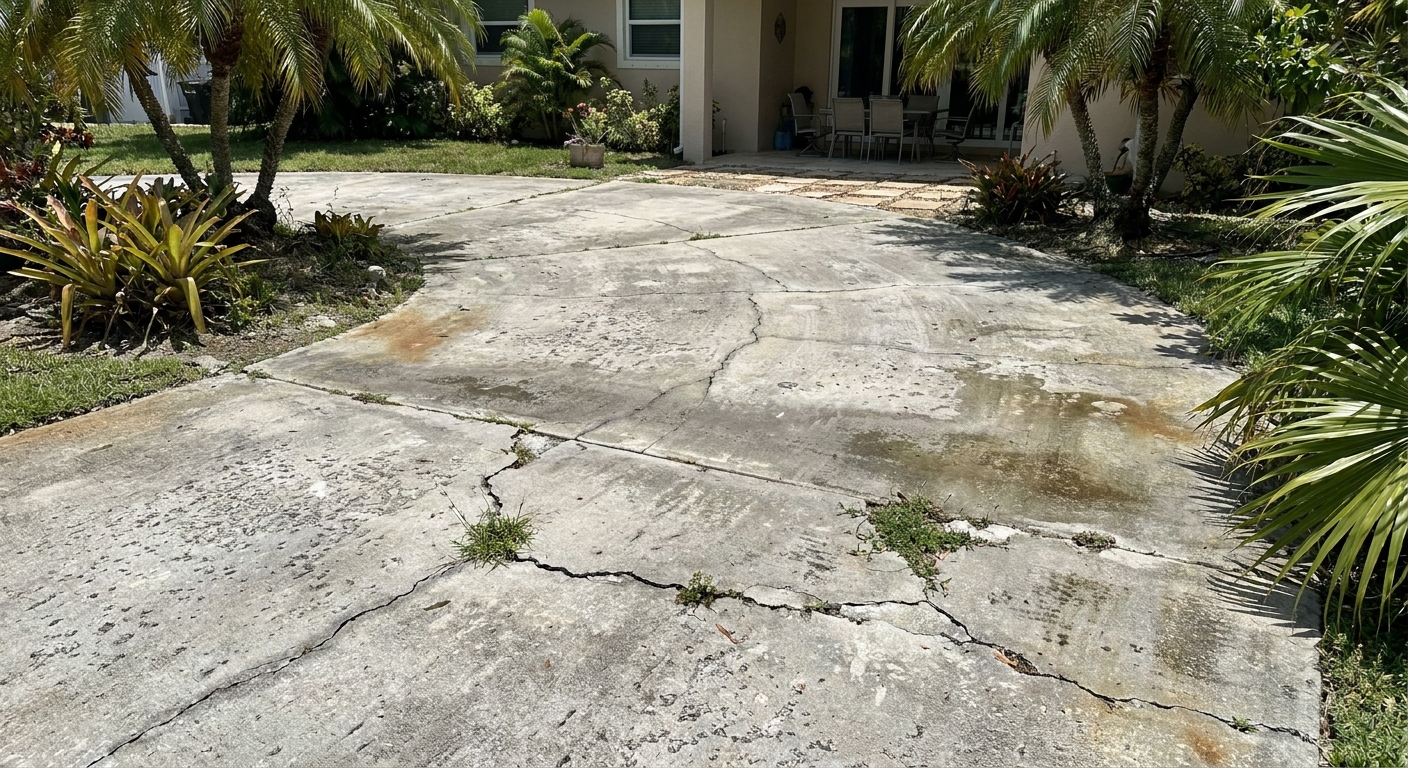
Most homeowners think concrete is invincible. Pour it, let it set, and forget about it for decades. But Orlando's climate doesn't care what you think. The heat, the rain, the soil composition — they all work together to break down what looks like solid ground. If your patio's cracking, settling, or flaking apart faster than expected, it's not bad luck. It's physics, weather, and maybe a few shortcuts someone took during install.
We've seen patios fail in five years that should've lasted twenty. And it's almost never just one thing. It's the combination of moisture, movement, and neglect that turns a backyard centerpiece into a liability. The good news? Once you know what's happening, you can stop it — or at least slow it way down.
Heat and Humidity Do More Damage Than You'd Think
Orlando summers don't mess around. Concrete expands when it heats up and contracts when it cools down. That cycle repeats daily — sometimes hourly if a storm rolls through. Over time, those shifts create stress fractures. Small at first, then wider. Then deep enough to let water in, and that's when the real damage starts.
Humidity makes it worse. Moisture doesn't just sit on the surface here. It seeps into the pores of the concrete, especially if there's no sealant or the sealant wore off years ago. Once water gets inside and the sun bakes it, you're looking at surface erosion, spalling, and structural weakness that spreads faster than most people realize.
Poor Prep Work Shows Up Fast
Concrete only performs as well as the foundation beneath it. If the base wasn't compacted right, or if the wrong mix was used, or if someone rushed the cure time, the slab won't hold up. We see this all the time with patios that were part of a quick flip or a low-budget build.
Orlando's sandy soil makes this even trickier. Without proper grading and a stable sub-base, the ground shifts. The patio settles unevenly. Cracks form along the weak points. And once that starts, it doesn't stop on its own. You either fix the foundation or watch the damage spread.
Water Has Nowhere to Go
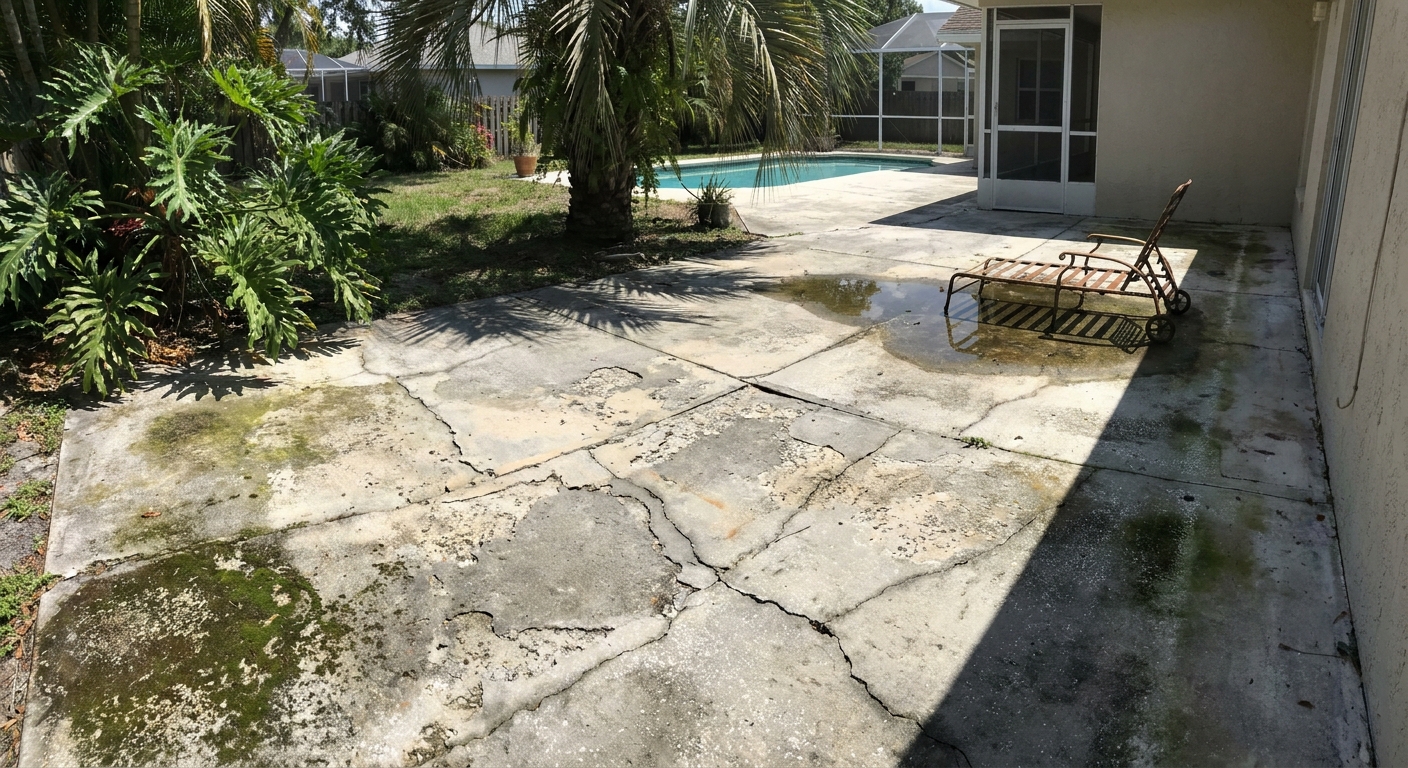
If your patio doesn't slope away from the house — or if there's no drainage plan at all — rainwater's going to pool. And in a place where storms drop two inches in an hour, that's a problem. Standing water doesn't just sit there looking ugly. It seeps in, weakens the concrete, and accelerates every other form of wear.
We've pulled up slabs where the underside was saturated for so long that the concrete turned soft. No amount of sealing fixes that. The only real solution is proper drainage from day one, and retrofitting it later is expensive. But it's still cheaper than replacing the whole thing.
Chemicals Aren't as Harmless as They Look
Pool splash-out, fertilizer runoff, cleaning agents — they all eat away at concrete. Chlorine breaks down the surface. Acidic treatments cause pitting. Even some paver sealers, if applied incorrectly, can do more harm than good. And because most of this happens slowly, homeowners don't notice until the damage is obvious.
If you're maintaining a pool or treating your lawn, keep an eye on where those chemicals land. Rinse the patio down after application. Don't let spills sit. And if you're using a pressure washer, go easy — high PSI can strip the surface layer if the concrete's already compromised.
Roots Don't Care What's Above Them
Orlando's full of oak trees, palms, and other fast-growing greenery. Beautiful to look at. Terrible for concrete. Tree roots expand as they grow, and when they hit resistance — like the underside of your patio — they don't stop. They push. And concrete loses that fight every time.
You'll see it first as uneven sections or small heaves in the slab. Then cracks start radiating out from the pressure points. If the tree's close enough, the damage can be severe within a few years. Cutting the roots might save the patio, but it could kill the tree. So plan your landscaping with some distance, or accept that one of them's going to give.
Skipping Maintenance Costs More Later
Concrete isn't a set-it-and-forget-it material, especially not here. It needs to be cleaned, resealed, and inspected regularly. Most pros recommend resealing every two to three years, depending on exposure. But we've walked onto patios that haven't been touched in a decade. The surface is porous, stained, cracking, and beyond what a simple reseal can fix.
Here's what regular upkeep should include:
- Sweeping or blowing off debris weekly to prevent buildup
- Washing the surface with a mild detergent and water quarterly
- Resealing every two to three years with a high-quality product
- Filling small cracks as soon as they appear
- Checking drainage and clearing any blockages after storms
None of this is complicated. But skipping it means you're letting small problems turn into expensive ones. And once the structural integrity's gone, patching won't cut it.
Overloading the Slab Leads to Failure
Concrete has weight limits. A standard patio slab is designed for furniture, foot traffic, maybe a grill. It's not engineered to support a hot tub, a full outdoor kitchen, or a parked vehicle. But we've seen all of those things sitting on residential patios — and the cracks to prove it.
If you're planning to add something heavy, talk to a structural engineer first. You might need to pour a thicker slab, add rebar, or build a separate pad. Trying to retrofit support after the fact is messy and expensive. And ignoring the issue just means you'll be replacing the whole thing sooner.
When the Install Was Rushed
Not every contractor takes the time to do it right. Some skip the vapor barrier. Some don't compact the base properly. Some use the wrong concrete mix or don't let it cure long enough before allowing traffic. And in a market where speed matters, corners get cut.
Here's what a proper install should include:
- A compacted, level sub-base with proper drainage slope
- Vapor barrier to prevent moisture from below
- Correct concrete mix for Florida's climate
- Control joints to manage cracking
- Adequate cure time before use or sealing
If your patio's failing early and you suspect poor workmanship, get a second opinion. Sometimes the damage can be repaired. Other times, starting over is the only real fix.
UV Exposure Breaks Down Sealers
Florida sun is relentless. And while concrete itself won't "sunburn," the sealant protecting it will degrade under constant UV exposure. Once the sealer breaks down, moisture gets in. Stains set. The surface becomes porous. And from there, it's a slow slide toward spalling and cracking.
We recommend UV-resistant sealers specifically rated for high-sun environments. Cheaper products might last a year. The good stuff? Three to five, depending on conditions. And reapplying before the old layer's completely gone is smarter than waiting until the concrete's already compromised.
Soil Movement Underneath
Orlando sits on sandy, shifting soil. When the ground moves — whether from settling, erosion, or changes in the water table — the concrete above it moves too. And concrete doesn't bend. It cracks.
This is why base prep matters so much. A well-compacted gravel or crushed stone base gives the slab stability even when the soil shifts. But if that step was skipped or done poorly, you're looking at cracks, voids underneath, and eventual collapse in the worst cases. Mudjacking or foam injection can sometimes stabilize things, but prevention's always cheaper.
Freeze-Thaw Doesn't Happen Here, But Wet-Dry Does
We don't deal with freeze-thaw cycles in Orlando. But we do get wet-dry cycles that function similarly. Rain saturates the concrete. Sun dries it out. Repeat. Over and over. That expansion and contraction weakens the internal structure, especially if the concrete wasn't mixed or cured properly to begin with.
It's one reason why sealing is so critical here. A good sealer reduces water absorption, which limits the wet-dry damage. But once the concrete's already saturated and cracking, sealing won't reverse it. You're managing symptoms, not curing the disease.
What to Watch For
Catching problems early gives you options. Wait too long, and you're looking at full replacement. Here's what we tell homeowners to keep an eye on:
- Hairline cracks that start small but spread over time
- Uneven sections or areas that have settled
- Pooling water after rain
- Flaking or spalling on the surface
- Discoloration or staining that won't wash off
If you're seeing any of these, it's time to call in a pro. Don't wait until the patio's a safety hazard or an eyesore. Early intervention saves money and extends the life of the slab.
Why Some Patios Last and Others Don't
The difference between a patio that lasts five years and one that lasts twenty comes down to three things: quality of install, ongoing maintenance, and environmental factors you can't always control. But two out of three are in your hands.
If you're building new, hire someone who knows what they're doing. If you've already got a patio, treat it like the investment it is. Clean it, seal it, fix small problems before they become big ones. And if you're not sure what's happening or why it's failing, bring in someone who can diagnose it properly. Concrete's forgiving — until it's not. And once it's gone too far, there's no patching your way out.
Let’s Protect Your Patio for the Long Haul
We know how frustrating it is to watch your concrete patio wear out before its time. Let’s work together to keep your outdoor space looking great and standing strong, no matter what Orlando’s weather throws at it. If you’re ready for expert advice or need repairs done right, give us a call at 407-310-5072 or request a quote and let’s make sure your patio lasts for years to come.
‹ Back
Recent Posts
-
What Causes Concrete Patios in Orlando to Wear Out Faster?
September 30, 2026
-
When Should You Repair Your Pool Deck in Orlando Instead of Replacing It?
September 16, 2026
-
Can Concrete Resurfacing in Orlando Save You From Full Replacement?
September 2, 2026
-
How Often Should You Seal Your Concrete Driveway in Orlando?
August 19, 2026
-
Is Your Orlando Sidewalk Starting to Sink or Shift?
August 5, 2026