When Should You Repair Your Pool Deck in Orlando Instead of Replacing It?
Most pool owners in Orlando see cracks and think replacement. But tearing out concrete and starting over isn't always the answer — and it's rarely the cheapest one. Pool decks take a beating here. Sun, chlorine, humidity, and foot traffic all leave marks. But not every mark means the structure is done. Some damage sits on the surface. Some runs deeper. And knowing the difference is what keeps you from throwing away thousands on work you didn't actually need.
We've worked with enough homeowners to know this much: repair isn't just the budget option. It's often the smarter move. Especially when the bones of your deck are still solid and only the skin needs attention. Let's break down when patching, resurfacing, or spot fixing beats ripping everything out.
Surface Damage Doesn't Mean Structural Failure
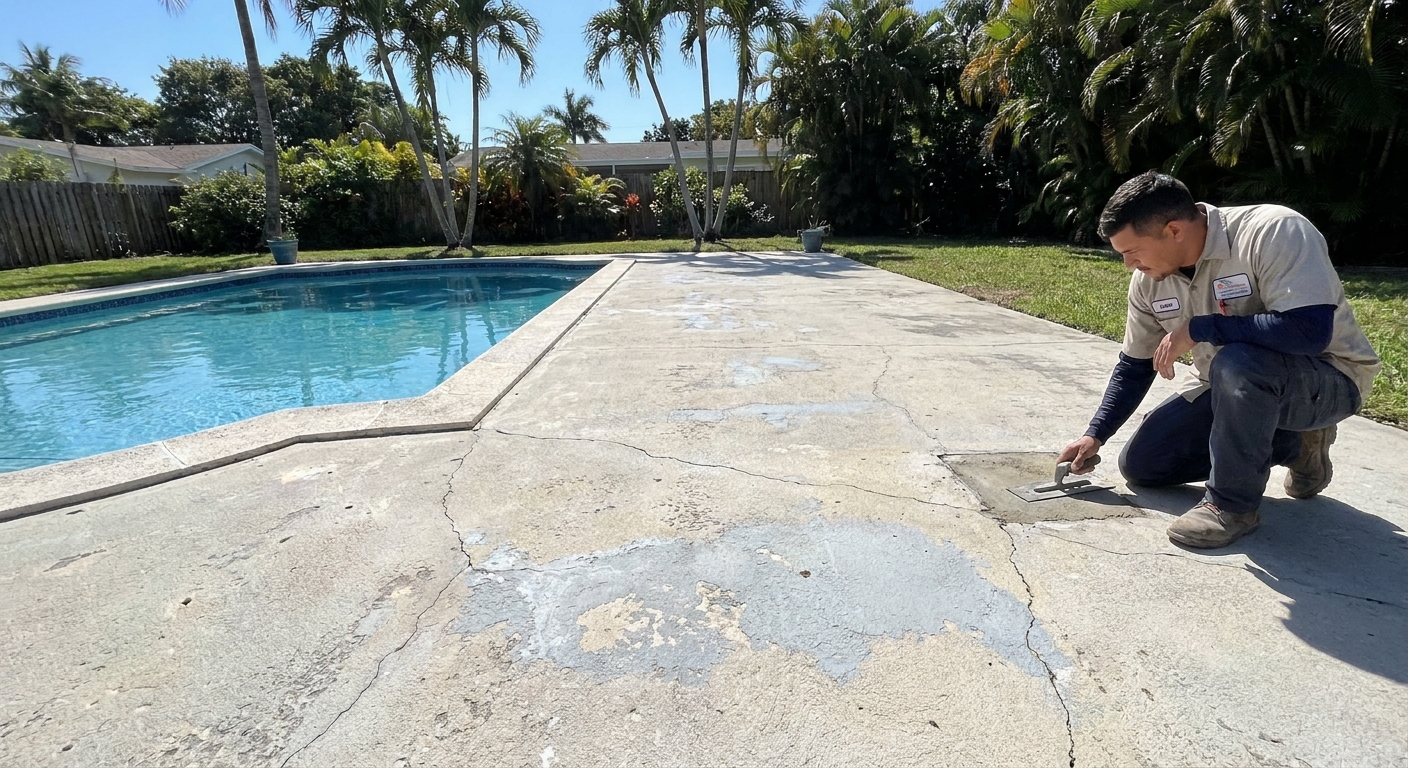
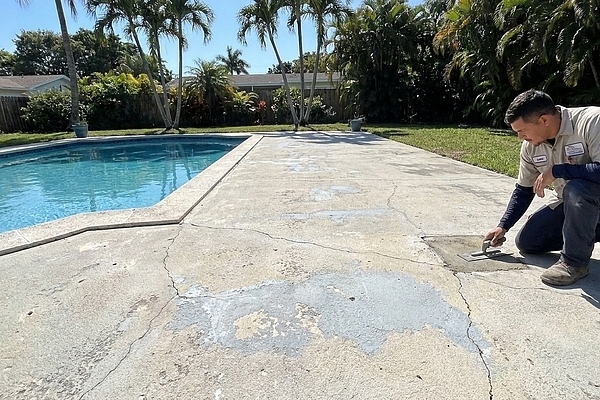
Hairline cracks happen. They're normal. Concrete shifts. Soil settles. Temperature swings cause expansion and contraction. None of that means your deck is beyond saving. If those cracks are shallow and limited to the top layer, resurfacing or crack filling can lock things down before water gets in and makes the problem worse.
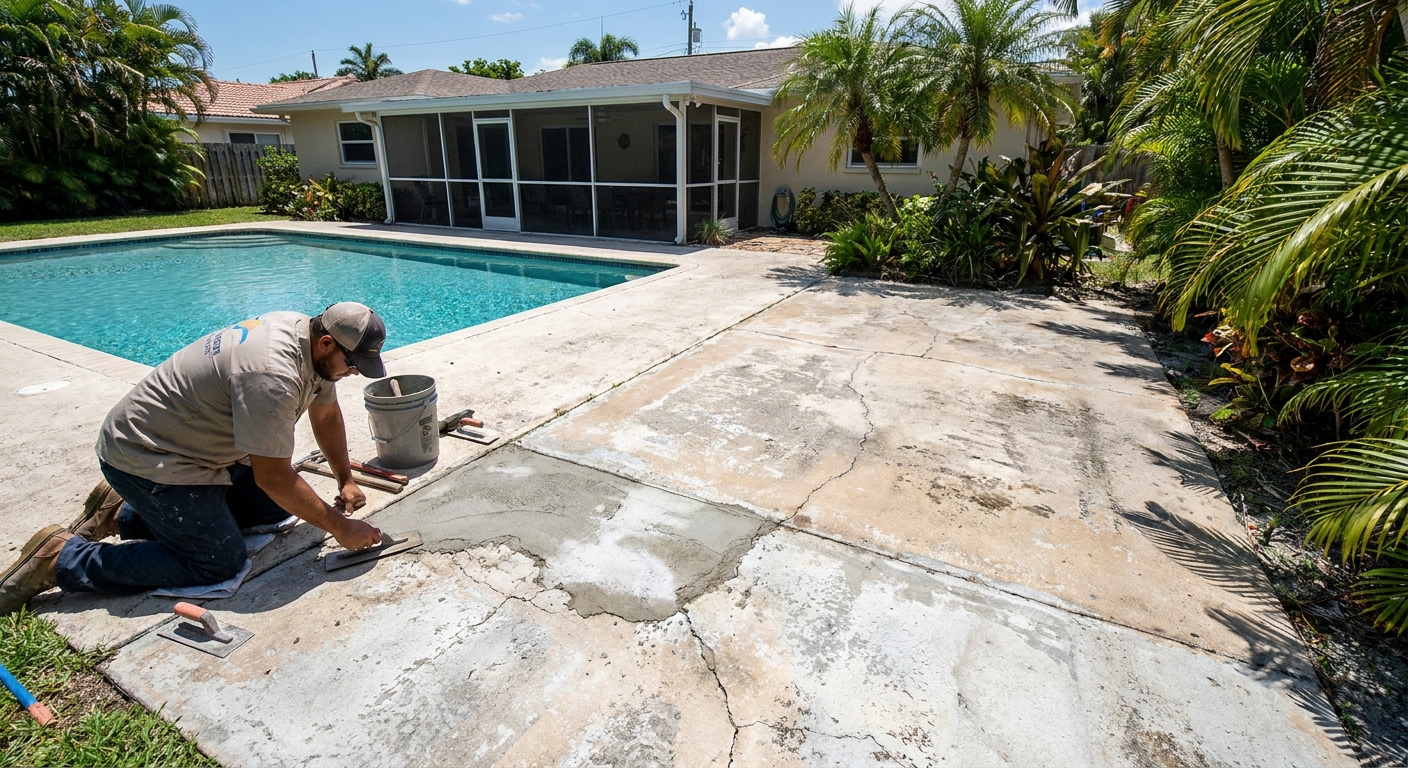
The same goes for chips and rough patches. Wear shows up where people walk the most — around the ladder, near the steps, along the edge. But if the slab underneath is intact, you don't need to replace it. You just need to smooth it out and seal it up. Resurfacing products exist for exactly this reason, and they work.
Color Fade Is Cosmetic
Orlando sun doesn't mess around. Neither does pool water. Between UV rays and chlorine splashes, your deck's going to lose its color. That's not decay — that's chemistry. And it doesn't call for demolition.
A fresh coat of deck stain or a resurfacing layer brings the vibrancy back without touching the foundation. You're not fixing a flaw in the structure. You're restoring what weathering took away. That's a weekend project, not a month-long renovation.
Tile and Paver Problems Are Usually Isolated
If a few tiles pop loose or a handful of pavers shift out of place, you don't replace the whole deck. You replace the pieces that moved. Re-grout the gaps. Reset the stones. Lock them back in. As long as the base layer is stable and drainage isn't compromised, spot repairs handle it just fine.
Here's what typically qualifies for targeted fixes:
- One or two cracked tiles near high-traffic zones
- Loose pavers that shifted after heavy rain
- Missing grout along seams or edges
- Individual stones that settled unevenly
- Surface chips on decorative caps or coping stones
Mold and Mildew Don't Equal Rot
Humidity breeds growth. That's life in Central Florida. But mold on your pool deck doesn't mean the concrete is compromised. It means moisture sat there long enough for spores to take hold. Power washing and sealing knock that out. A good cleaner kills what's visible. A proper sealant keeps new growth from coming back.
If the discoloration wipes away or pressure washes off, the deck itself is fine. You're treating a surface issue, not a structural one. Don't confuse algae stains with foundation failure. They're not the same problem.
When Replacement Actually Makes Sense
Repair works when the damage is shallow. But if cracks run deep, spread wide, or show up everywhere, that's a different conversation. Large sections sinking or lifting? That's a base problem. Water pooling in multiple spots because the slope's wrong? That's a drainage problem. Both point toward replacement, not patching.
You'll also want to replace if the deck keeps cracking after repeated repairs. At that point, you're fighting the inevitable. The structure's reached the end of its service life, and trying to Band-Aid it only delays the rebuild.
What Repair Gets You
Choosing concrete repair over replacement isn't just about saving money — though that's a big part of it. It's also about speed, simplicity, and keeping what already works. Repairs take days, not weeks. They don't require permits or heavy equipment. And if you like the look of your current deck, you get to keep it.
Here's what makes repair the better play in most cases:
- Lower cost compared to full tearout and reinstall
- Shorter timeline with less disruption to pool use
- Reduced material waste and environmental impact
- Preservation of original design and layout
- Ability to address problems before they spread
Documentation Backs Up Your Decision
Before you commit to either option, document what you're dealing with. Take photos of every crack, stain, and uneven section. Measure the damage. Note where water collects. That record helps you compare quotes and make sure contractors aren't upselling work you don't need.
If you're filing an insurance claim or planning to sell the home later, that documentation also proves what was done and why. It's not about distrust — it's about having a clear picture of what the deck looked like before and after.
The Right Call Depends on the Deck's Condition
Some damage lives on the surface. Some runs through the core. Knowing which one you're looking at determines whether you repair or replace. Surface cracks, color loss, isolated tile issues, and mold growth? Those are all repair-friendly. Widespread structural cracking, major settling, or persistent water problems? That's replacement territory.
Here's what qualifies as repairable in most situations:
- Shallow cracks under a quarter-inch wide
- Fading or staining from sun and chemicals
- Rough or pitted surfaces that haven't compromised the slab
- Loose tiles or pavers in small sections
- Mildew or algae buildup on the top layer
Get a Second Opinion Before You Dig
Contractors who specialize in replacements will push replacement. That's how they make money. But not every contractor operates that way, and not every deck needs that level of intervention. If the first estimate sounds extreme, bring in someone else. A good inspector or repair specialist will tell you honestly whether patching will hold or if the whole thing needs to come out.
Don't assume the most expensive option is the most thorough. Sometimes it's just the most profitable — for them. You want someone who walks the deck, tests the surface, checks for movement, and explains what's actually failing versus what just looks bad.
Repair Buys Time and Saves Money
Not every worn pool deck is a candidate for demolition. Most of the time, targeted repairs can add years of life without the cost or hassle of starting over. If the structure underneath is sound and the damage is limited to the finish layer, repair makes sense. Save replacement for when the foundation itself has given out.
We help Orlando homeowners make these calls every day. The right move depends on what's broken, how far it's spread, and whether the deck can hold up after the fix. Don't let cosmetic wear convince you the whole thing's toast. Most of the time, it's not. Fixing up concrete pools in Orlando backyards requires understanding when to repair and when to replace. If you're dealing with cracks in concrete or need guidance on finding the right time to repair concrete cracks, professional assessment helps you make informed decisions. For comprehensive support with your project, explore our full range of concrete services.
Let’s Restore Your Pool Deck Together
We know how important it is to keep your pool area safe, beautiful, and ready for every season in Orlando. If you’re unsure whether repair or replacement is the right move, let’s talk it through and find the best solution for your home. Give us a call at 407-310-5072 or request a quote—we’re here to help you get the most out of your pool deck without unnecessary hassle or expense.
‹ Back
Recent Posts
-
When Should You Repair Your Pool Deck in Orlando Instead of Replacing It?
September 16, 2026
-
Can Concrete Resurfacing in Orlando Save You From Full Replacement?
September 2, 2026
-
How Often Should You Seal Your Concrete Driveway in Orlando?
August 19, 2026
-
Is Your Orlando Sidewalk Starting to Sink or Shift?
August 5, 2026
-