Is Your Concrete Patio in Orlando Holding Water After Rainstorms?
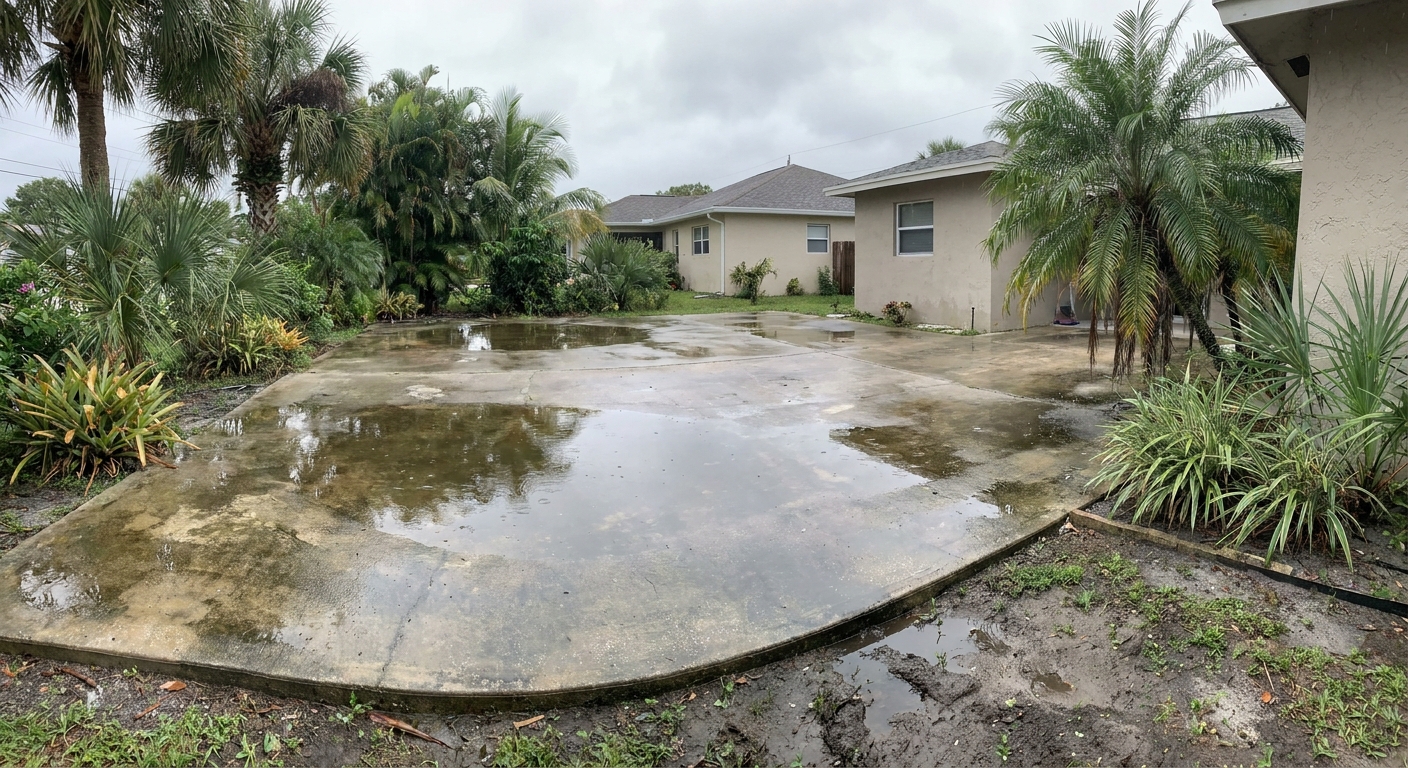
Orlando homeowners deal with rain like it's a second job. Afternoon storms roll in, dump a few inches, and vanish—except when they leave a pool on your patio that won't quit. That's not just annoying. It's a sign that something underneath isn't working the way it should. And ignoring it doesn't make it go away. It makes it worse.
Water that sits on concrete after every storm points to installation shortcuts, settling soil, or drainage that was never there to begin with. We're going to walk through why it happens, what it costs you if you ignore it, and how to fix it without ripping out the whole slab.
The Slope Was Never Right
Concrete patios need a grade. Not much—just a quarter inch per foot—but enough to push water off the surface and away from your foundation. When that slope doesn't exist, or when it slopes the wrong direction, every rainstorm leaves behind a mess. And in Orlando, where heavy rain is a weekly event half the year, that adds up fast.
Sometimes the problem isn't even the concrete itself. The ground below shifts. Soil compacts. Tree roots push up from underneath. What started as a flat, well-graded pour ends up sagging in the middle or tilting toward the house. You can't see it happening, but your patio tells the story every time it rains.
Standing Water Breaks Down More Than Concrete
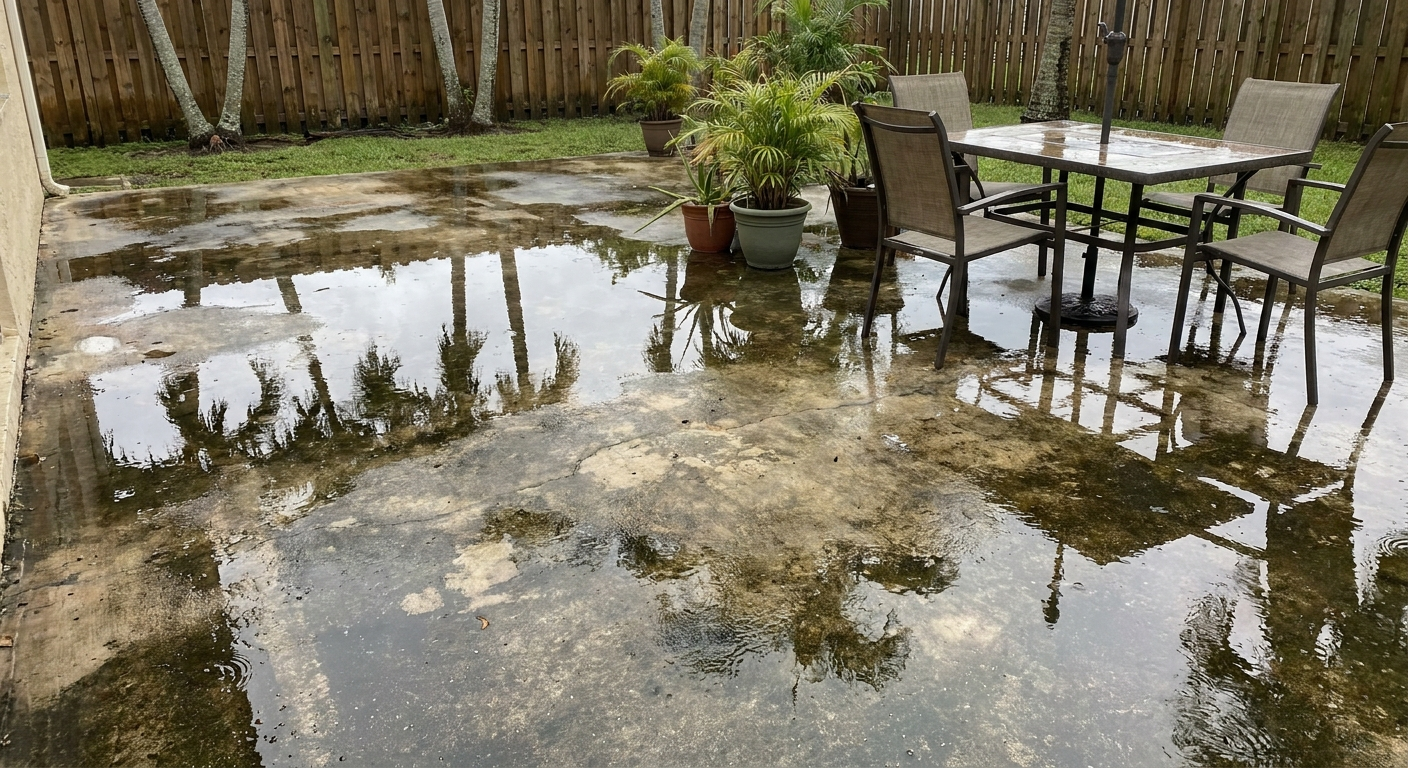
Puddles aren't harmless. They're slippery, they breed mosquitoes, and they give mold and algae the perfect environment to take over. Once that green film shows up, it's not just ugly—it's a hazard. We've seen too many families avoid their own patios because the surface is too slick or too stained to use.
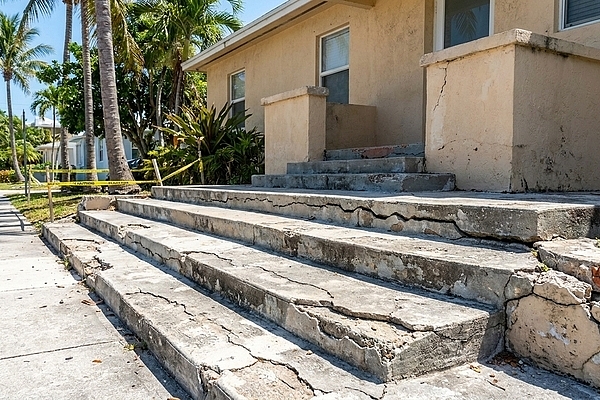
But the real damage happens where you can't see it. Water seeps into cracks, works its way under the slab, and undermines the base. Eventually, the concrete shifts even more. Cracks widen. Sections start to separate. What could have been a drainage fix becomes a full replacement job.
- Slick surfaces make outdoor spaces unusable and unsafe
- Mold and algae spread fast in humid climates like ours
- Moisture under the slab weakens the base over time
- Cracks grow wider with every wet-dry cycle
- Pooling near your foundation risks interior water damage
Fixing the Grade Without Starting Over
You don't always need to tear out the slab. Depending on how bad the slope issue is, resurfacing can bring the grade back to where it should be. Self-leveling compounds work well for shallow depressions, and they bond to existing concrete when prepped correctly. For larger sections, a thin overlay or mudjacking can lift and stabilize without the cost of a full replacement.
If the problem is localized—just one low spot or a sunken corner—targeted repairs often do the job. Fill the low area, smooth it out, and seal the surface. It's not glamorous, but it stops the water from sitting there after every storm. And it keeps the rest of the patio from getting worse.
- Self-leveling compounds handle minor dips and low spots
- Mudjacking lifts sunken sections by injecting material underneath
- Resurfacing restores proper slope without full demolition
- Targeted repairs save money when the issue is isolated
- Sealing the finished surface prevents future water penetration
Drainage Fixes That Actually Work
Sometimes the patio itself is fine—it's the water that has nowhere to go. If your yard doesn't naturally shed water away from the house, you need to give it a path. French drains, channel drains, and even strategically placed gravel beds can redirect runoff before it ever reaches the concrete.
We've installed channel drains along the edge of patios that were collecting water from roof runoff and yard overflow. Once the drain is in, the patio dries within minutes of a storm instead of holding water for hours. It's one of those fixes that feels obvious after the fact but gets overlooked during installation.
- French drains move water underground and away from the slab
- Channel drains capture surface runoff at the patio edge
- Gravel beds absorb overflow and prevent pooling
- Downspout extensions keep roof water from flooding the patio
- Swales and berms guide water toward natural drainage points
When DIY Stops Making Sense
Small puddles in one corner? That's usually fixable with a bag of resurfacer and a weekend. But when half your patio is underwater after every storm, or when cracks are spreading and the slab is visibly sinking, it's time to bring in someone who knows what they're doing. Foundation issues, poor base prep, and major settling don't respond to quick fixes.
We've seen plenty of homeowners try to patch their way out of a grading problem. It doesn't work. The water finds a new low spot. The cracks come back. And eventually, the cost of repeated repairs exceeds what it would have taken to fix it right the first time.
- Large areas of standing water signal major slope or base issues
- Visible settling or separation between slab sections needs professional assessment
- Cracks that keep reappearing point to ongoing movement underneath
- Water pooling near the foundation risks structural damage inside
- Repeated DIY fixes that fail cost more than one professional job
Stop the Problem Before It Starts
If you're planning a new patio installation or replacing an old one, the slope and drainage need to be part of the conversation from day one. Too many contractors pour flat slabs because it's faster. They assume the yard will handle the runoff. In Orlando, that assumption fails every summer.
Proper base prep, the right slope, and a plan for where the water goes—those three things prevent 90% of the drainage problems we see. Add a quality concrete sealing once the concrete cures, and you've got a patio that sheds water instead of holding it. It's not complicated. It just has to be done right.
Let’s Make Your Patio Work for You
We know how frustrating it is to watch your patio turn into a pond after every Orlando downpour. Let’s put an end to standing water and get your outdoor space back to the way it should be—dry, safe, and ready for anything. If you’re ready to talk solutions, give us a call at 407-310-5072 or request a quote and let’s get your patio draining right again.
‹ Back
Recent Posts
-
When Should You Repair Your Pool Deck in Orlando Instead of Replacing It?
September 16, 2026
-
Can Concrete Resurfacing in Orlando Save You From Full Replacement?
September 2, 2026
-
How Often Should You Seal Your Concrete Driveway in Orlando?
August 19, 2026
-
Is Your Orlando Sidewalk Starting to Sink or Shift?
August 5, 2026
-