Should You Seal New Concrete in Orlando?
Most property owners think concrete is indestructible. Pour it, smooth it, forget it. But Orlando's climate doesn't care what you think — and if you're not protecting that surface, you're watching money crack and fade in real time. Sealing isn't about aesthetics alone. It's about stopping moisture, UV damage, and staining before they turn a fresh pour into a maintenance nightmare.
So here's what matters. If you're investing in new concrete services, treat it like an asset that needs defense. Every surface is exposed. Every season brings humidity, rain, and relentless sun. And every decision about sealing should be rooted in how that slab will hold up — not just how it looks the day it cures.
The Weather Doesn't Play Fair
Orlando sits in a subtropical zone where humidity hangs in the air and afternoon storms show up like clockwork. That moisture doesn't just sit on top of concrete — it works its way inside. Unsealed surfaces absorb water through pores, and when that water gets trapped, you're looking at cracks, surface scaling, and algae growth that turns concrete patios into slip hazards.
Then there's the sun. UV exposure in Central Florida is brutal. It bleaches color out of decorative finishes and breaks down the surface layer over time. If your concrete isn't shielded, it ages faster than it should. And once the damage sets in, concrete repair and resurfacing cost more than prevention ever would have.
What a Sealer Actually Does
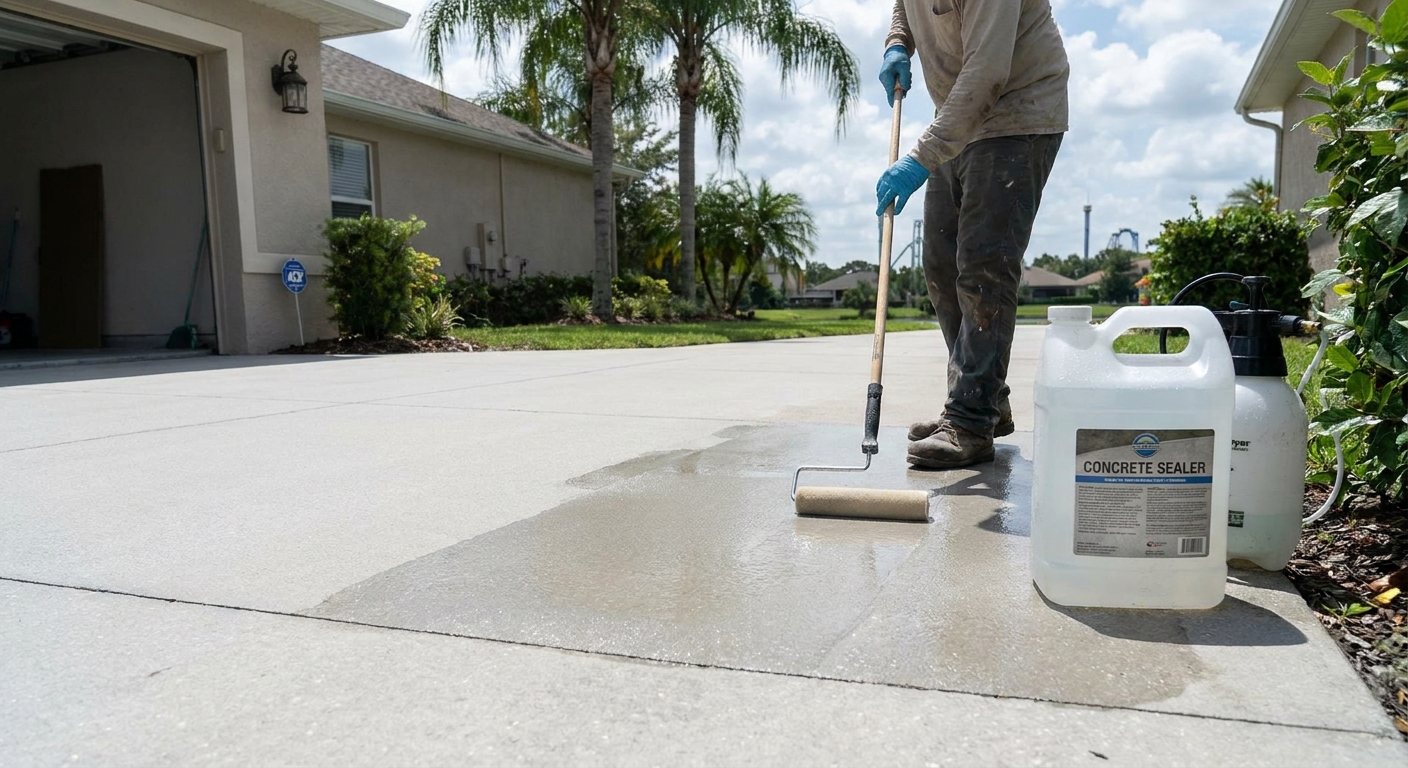
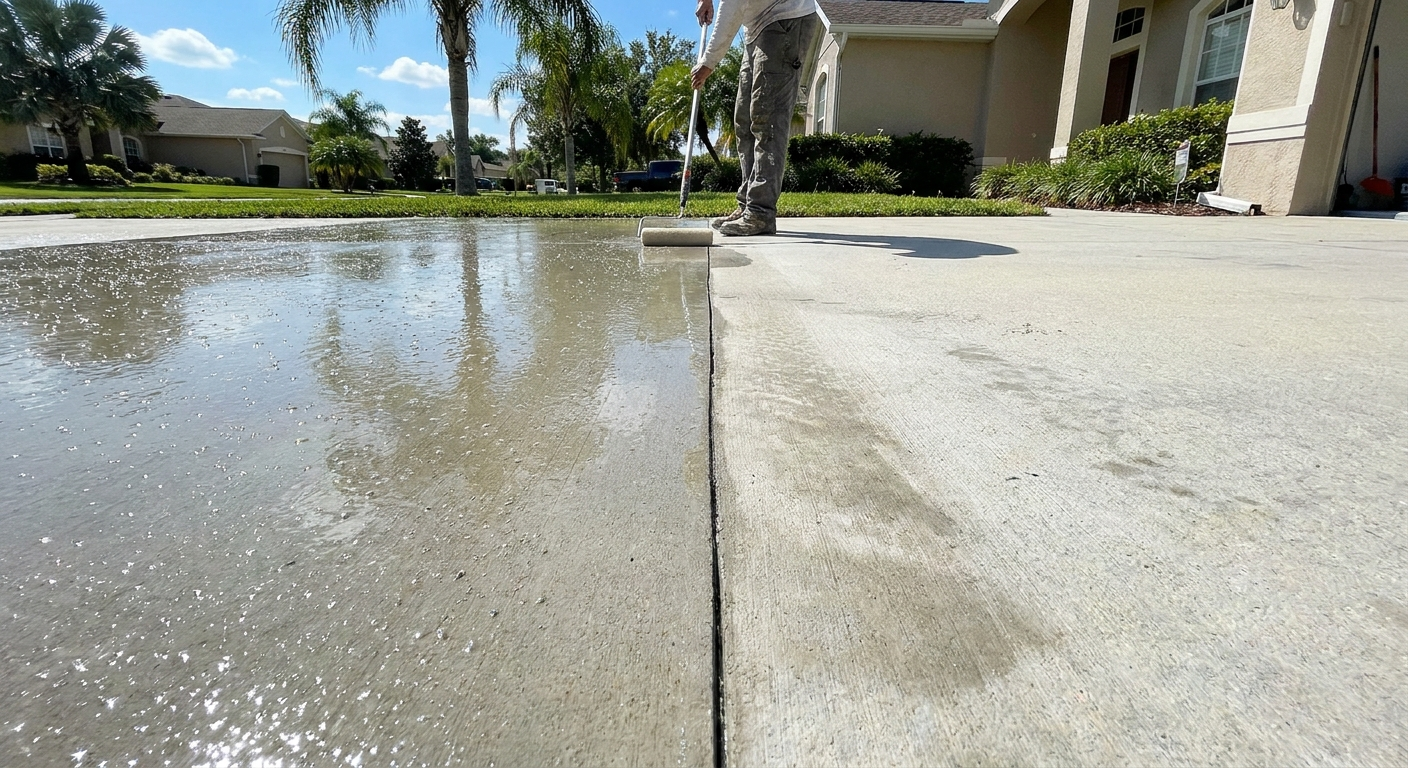
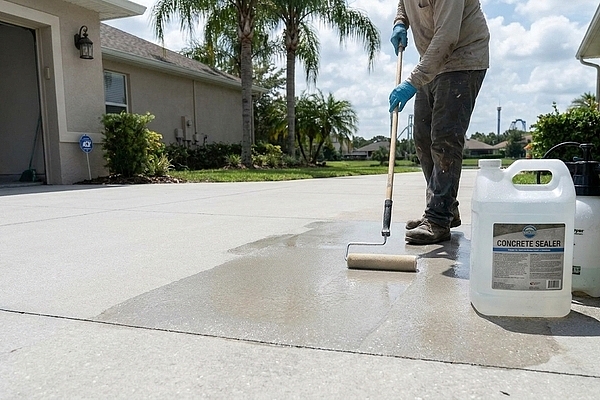
Sealers create a barrier. They repel water, block contaminants, and slow down wear from foot traffic or vehicles. Some penetrate deep into the concrete to reinforce from within. Others sit on the surface and add gloss or matte sheen depending on the look you want.
Not all sealers work the same way. Penetrating options protect without changing appearance much. Acrylics give you shine and color enhancement. Epoxies and polyurethanes offer heavy-duty resistance for high-traffic zones. The right choice depends on what the concrete is used for and how much abuse it takes daily.
Why Sealing Matters in This Climate
- Moisture gets blocked before it seeps in and causes internal damage or surface spalling
- UV rays get deflected, which keeps decorative finishes from fading and prevents surface breakdown
- Oil, grease, and chemical spills stay on top instead of soaking in, making cleanup simple
- Color and texture get enhanced, especially on stamped or stained concrete that's meant to stand out
- Lifespan stretches out, cutting down on repairs and keeping the surface functional longer
Timing the Application
Fresh concrete needs time to cure. Rush the sealer, and you trap moisture that hasn't fully evaporated yet. That leads to cloudiness, adhesion failure, or even surface blistering. Most pros recommend waiting a full 28 days after the pour before applying any sealer.
In Orlando's humidity, drying time can stretch even longer. The concrete might look ready, but moisture levels below the surface tell a different story. Test kits exist to measure moisture content before sealing. Skip that step, and you're gambling with how the sealer bonds and performs.
The Trade-Offs You Should Know
Sealing isn't a one-time fix. Depending on the product and how much traffic the surface sees, reapplication happens every two to five years. High-gloss finishes need more frequent touch-ups than matte or penetrating sealers. Budget for that upfront so it doesn't catch you off guard later.
There's also the slickness factor. Some sealers, especially glossy ones, turn slippery when wet. Pool decks and walkways need anti-slip additives mixed in to keep traction safe. Cost is another consideration — sealing adds to the project total, but it's cheaper than resurfacing cracked or stained concrete down the line.
Common Mistakes That Cost More Later
- Applying sealer before the concrete fully cures, which traps moisture and ruins adhesion
- Choosing the wrong sealer type for the surface use, leading to premature wear or improper protection
- Skipping surface prep like cleaning and etching, which prevents the sealer from bonding correctly
- Ignoring reapplication schedules, leaving the concrete exposed and vulnerable after the sealer wears thin
- Using low-quality products that break down faster under Orlando's intense sun and rain cycles
Handling It Yourself or Calling In Help
DIY sealing is possible if you've got the tools and know the process. But mistakes here show up fast. Uneven coverage, streaking, or improper drying conditions can wreck the finish and waste product. Professionals bring commercial-grade sealers, proper equipment, and the experience to handle Orlando's humidity without guesswork.
Hiring out also means the job gets done faster and with fewer variables. They'll test moisture levels, prep the surface right, and apply the sealer evenly. If something goes wrong, you've got someone accountable instead of a botched job you have to fix twice.
What Happens If You Skip Sealing
- Water infiltration leads to freeze-thaw damage in cooler months and constant moisture-related cracking year-round
- Stains from oil, rust, and organic material become permanent because there's no barrier stopping absorption
- Surface erosion accelerates as UV exposure and weather wear down the top layer without protection
- Mold and algae take hold in shaded or damp areas, creating discoloration and safety hazards
- Resale value drops when buyers see worn, stained, or damaged concrete that screams deferred maintenance
Protection Beats Patching Every Time
Sealing new concrete in Orlando isn't optional if you want it to last. The climate works against unsealed surfaces every single day. Moisture, sun, and organic growth don't take breaks. And once damage starts, it compounds fast.
We've seen too many property owners skip concrete sealing to save a few hundred dollars, then spend thousands on resurfacing or replacement years earlier than necessary. The math doesn't work in favor of going bare. Protect the investment from the start, maintain it on schedule, and the concrete holds up for decades instead of deteriorating in five.
Let’s Protect Your Concrete Investment
We know how tough Orlando’s weather can be on new concrete, and we’re here to help you get the most out of your project. If you want your concrete to look great and last for years, let’s talk about the right sealing solution for your property. Give us a call at 407-310-5072 or request a quote today—together, we’ll make sure your concrete stands up to whatever Florida throws at it.
‹ Back
Recent Posts
-
Should You Seal New Concrete in Orlando?
November 11, 2026
-
How Do You Know When Concrete Repair in Orlando Is No Longer Enough?
October 28, 2026
-
Should You Repair or Replace a Concrete Sidewalk in Orlando?
October 14, 2026
-
What Causes Concrete Patios in Orlando to Wear Out Faster?
September 30, 2026
-
When Should You Repair Your Pool Deck in Orlando Instead of Replacing It?
September 16, 2026