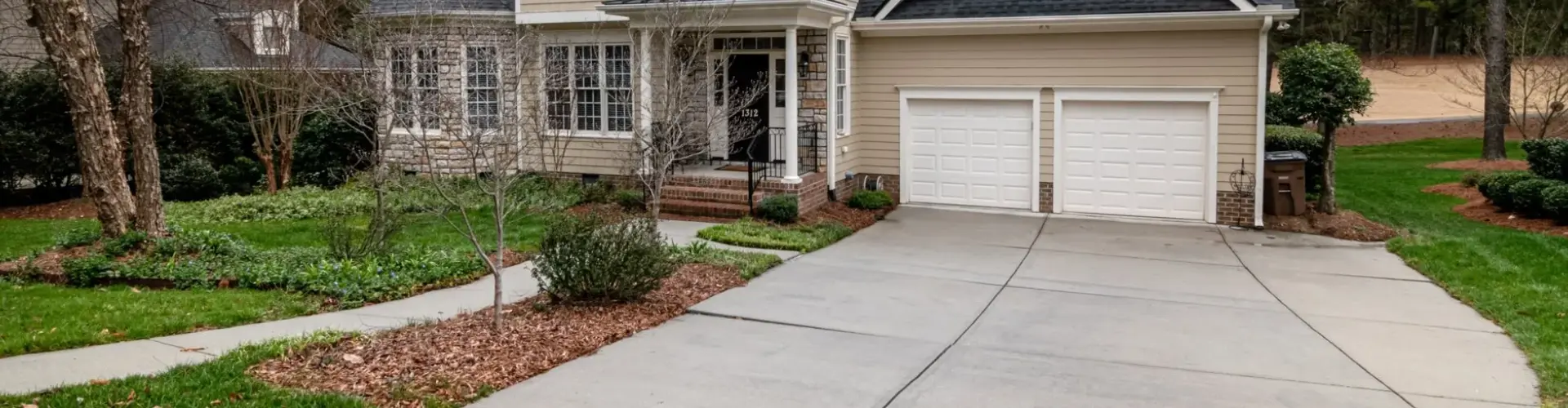
What Causes White Spots on Concrete Driveways in Orlando?
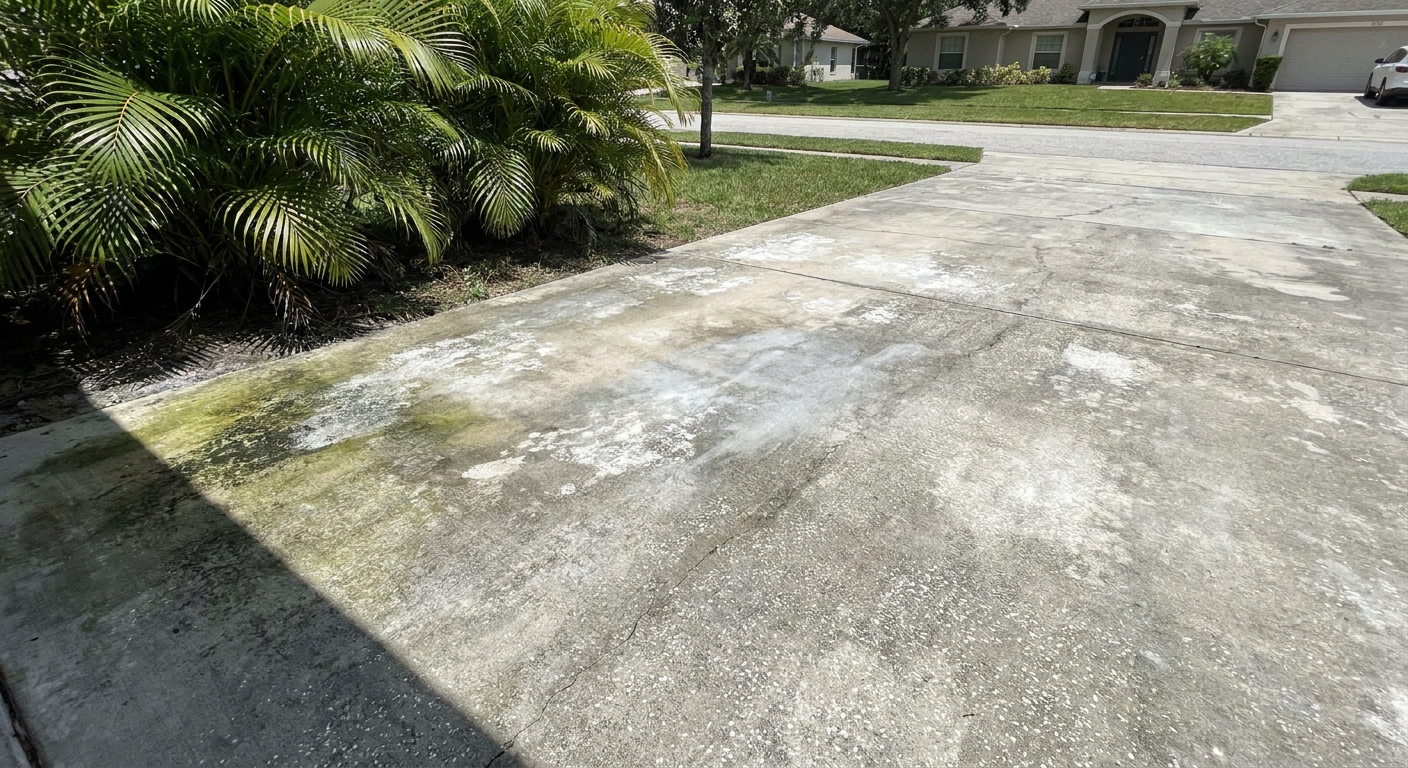
Most homeowners think concrete is bulletproof. Pour it, smooth it, forget it. But Orlando's climate doesn't play by those rules — and if you're not paying attention, your driveway will show it. White spots aren't just cosmetic. They're a signal that moisture, salts, or installation shortcuts are catching up to you. And the longer you wait, the harder they are to reverse.
So here's what matters. Those chalky patches appearing on your concrete aren't random. They're the result of how water moves, what's in your mix, and whether your driveway was built to handle Florida's humidity in the first place. Every white streak has a cause. Every fix starts with understanding what went wrong — not just scrubbing the surface and hoping it holds.
Salts Rising to the Surface
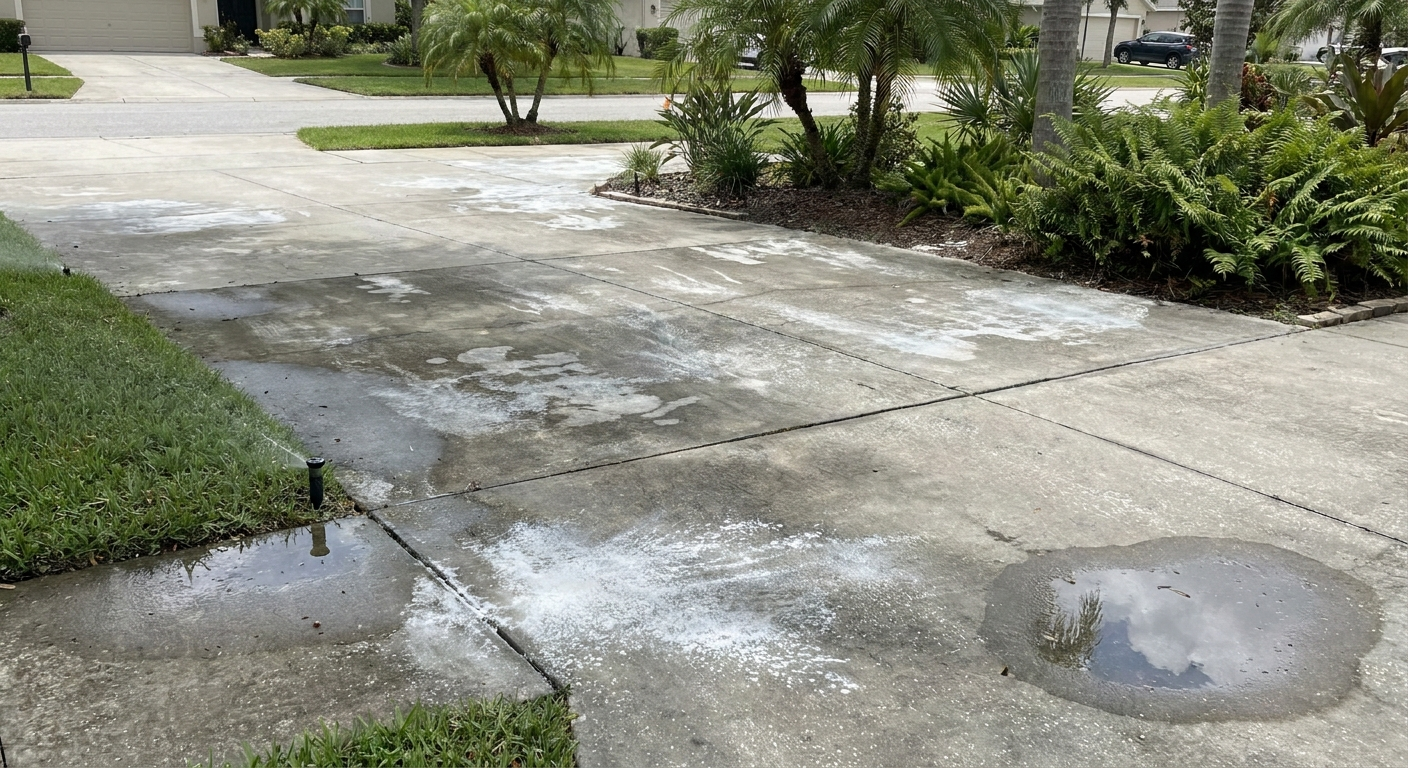
The white film you're seeing is usually efflorescence — dissolved salts migrating through the concrete as water evaporates. Orlando's endless rain and humidity create the perfect conditions for this. Water seeps into the slab, picks up soluble salts from the mix or the ground below, and carries them topside. When the moisture evaporates, the salts stay behind as a crusty white residue.
This isn't structural damage, but it's persistent. The salts don't disappear on their own, and they'll keep reappearing as long as moisture keeps moving through the concrete. If your driveway doesn't have a vapor barrier or proper drainage underneath, you're feeding the cycle every time it rains.
Water Has Nowhere to Go
Orlando gets more than its share of downpours. If your driveway wasn't graded correctly or the drainage system is clogged, water pools on the surface or seeps into the slab. That standing moisture doesn't just sit there — it migrates through the concrete, pulling salts along for the ride.
Poorly compacted soil beneath the driveway makes it worse. If the ground stays saturated, moisture constantly wicks upward through the concrete. No amount of surface cleaning will fix that. You need to address where the water is coming from and how it's being channeled away.
Sealer Traps More Than It Protects
Sealers are supposed to protect concrete from stains and weathering. But if you apply one over a damp surface or use the wrong product for Orlando's climate, you're locking moisture inside. That trapped water has to go somewhere — and when it tries to escape, it brings salts with it. The result is white spots forming under or within the sealer itself.
Some sealers also turn cloudy or white on their own, especially acrylic-based products exposed to UV rays and high humidity. If the concrete wasn't fully cured before sealing, or if the surface wasn't cleaned properly, the sealer won't bond correctly. That's when you start seeing peeling, hazing, and discoloration, which often requires concrete driveway sealing in Orlando to be redone correctly.
What Went Into the Mix
Not all concrete is created equal. If the original mix had too much water, high salt content, or contaminated aggregates, you're already starting at a disadvantage. Excess water weakens the slab and increases the movement of salts. Using non-potable water or dirty sand introduces additional minerals that show up later as white deposits.
Installation practices matter just as much. Finishing the surface before it's ready, failing to cure properly, or skipping moisture barriers can all lead to efflorescence down the line. If shortcuts were taken during the pour, your driveway is paying for it now. Understanding mistakes to avoid when pouring a new concrete driveway helps prevent these issues from the start.
Chemicals Making Contact
Orlando might not need deicing salts often, but when cold snaps hit, some homeowners reach for them anyway. Those salts penetrate concrete and react with internal moisture, leaving white residue behind. The same goes for fertilizers, pool chemicals, or harsh cleaners that splash onto the driveway. Even small amounts can trigger salt deposits or surface discoloration.
If you're using strong chemicals near your driveway, rinse them off immediately. Letting them soak in gives them time to break down the surface and introduce foreign salts into the mix.
Biological Growth in Wet Zones
Sometimes white spots aren't mineral deposits at all — they're mold, mildew, or algae. Shaded areas that stay damp are breeding grounds for these organisms. While most mold appears green or black, certain strains can look white or light gray. If the spots are fuzzy or slimy to the touch, you're dealing with biological growth, not salt.
Regular cleaning helps, but if the area doesn't get sunlight or airflow, the problem will return. You'll need to address the moisture source and improve drainage to stop it for good.
Stopping White Spots Before They Start
Prevention begins with proper installation. Use high-quality concrete with the right water-to-cement ratio. Ensure the ground is compacted and graded for drainage. Install a vapor barrier under the slab to block moisture from the soil. Let the concrete cure fully before sealing, and choose a breathable sealer designed for humid climates.
Maintenance matters too. Keep drainage channels clear. Rinse off spills and chemicals immediately. Avoid pressure washing at high PSI, which can force water deeper into the slab and worsen efflorescence. If you're applying a sealer, make sure the surface is completely dry and clean first, and consider working with experienced concrete contractors in Orlando who understand local conditions.
Cleaning Methods That Work
If white spots are already present, start with the gentlest approach. Scrub with a stiff brush and water to remove loose deposits. For stubborn efflorescence, use a cleaner specifically formulated for concrete — not generic acids or bleach, which can damage the surface or create new problems.
Test any cleaner in a small, inconspicuous area first. Apply it according to the manufacturer's instructions, then rinse thoroughly. If the spots return quickly, the issue is moisture-related, and surface cleaning won't solve it. You'll need to investigate drainage, sealing, or subsurface water issues.
When to Bring In a Professional
If white spots keep reappearing or if you suspect deeper moisture problems, it's time to call in a concrete specialist. They can assess whether the issue is efflorescence, sealer failure, or structural. They'll also check for cracks in concrete, poor drainage, or subsurface water that's feeding the problem.
A professional can recommend the right fix — whether that's resealing, resurfacing, or regrading the area around your driveway. Trying to DIY a recurring problem without diagnosing the root cause usually just wastes time and money. Addressing larger concrete repairs in Orlando homes may be necessary if the damage has progressed.
Building Driveways That Last
White spots aren't inevitable. They're the result of how concrete interacts with Orlando's climate and how well it was installed in the first place. Moisture will always be part of the equation here — but with the right materials, proper drainage, and regular maintenance, you can keep those salts where they belong: buried in the slab, not sitting on top of it.
Every driveway tells a story. Yours should be about durability and smart planning, not chalky streaks that won't go away. Address the causes early, and your concrete will look clean and solid for years without constant scrubbing or resealing.
Let’s Solve Your Concrete Worries Together
We know how frustrating it is to see white spots take over your driveway, especially after you’ve invested in your home. Let’s work together to get your concrete looking its best and keep it that way, rain or shine. If you’re ready for answers and real solutions, give us a call at 407-310-5072 or request a quote today and let’s restore your driveway’s curb appeal.
‹ Back
Recent Posts
-
What Causes White Spots on Concrete Driveways in Orlando?
November 25, 2026
-
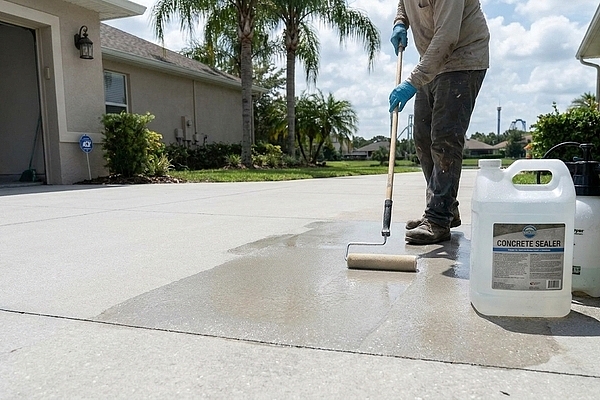
Should You Seal New Concrete in Orlando?
November 11, 2026
-
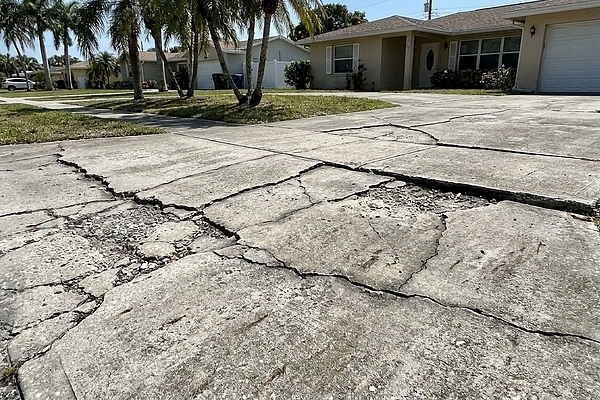
How Do You Know When Concrete Repair in Orlando Is No Longer Enough?
October 28, 2026
-
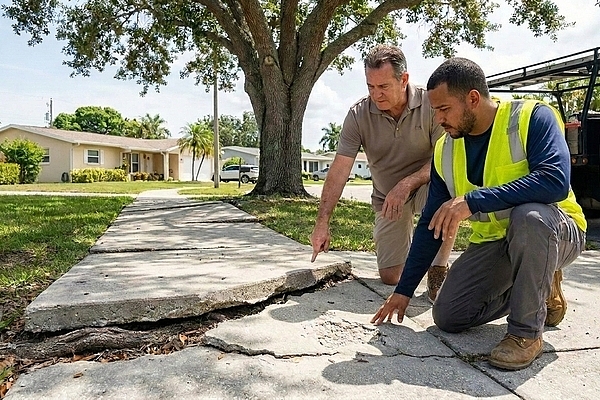
Should You Repair or Replace a Concrete Sidewalk in Orlando?
October 14, 2026
-
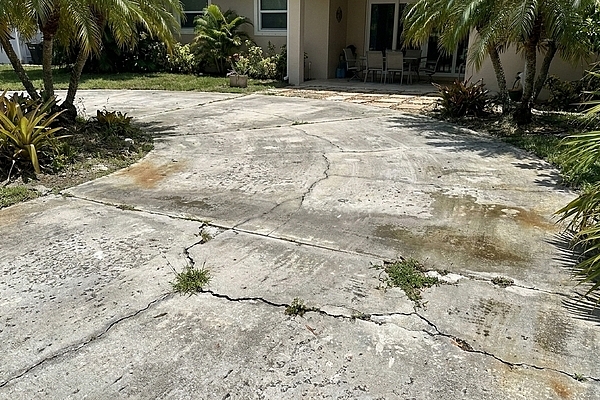
What Causes Concrete Patios in Orlando to Wear Out Faster?
September 30, 2026